

Pigmentation Is Not a Skin Problem — It’s a Heat & Stress Response
Pigmentation is one of the most misunderstood skin concerns in India.
Most people believe it is caused by:
- Sun exposure
- Dirt and pollution
- Tanning
- Not using fairness products
These are surface-level triggers, not the real cause.
Pigmentation is actually the skin’s protective response to excess heat and stress — both external and internal.
Understanding Pigmentation from a Skin-Intelligence Perspective
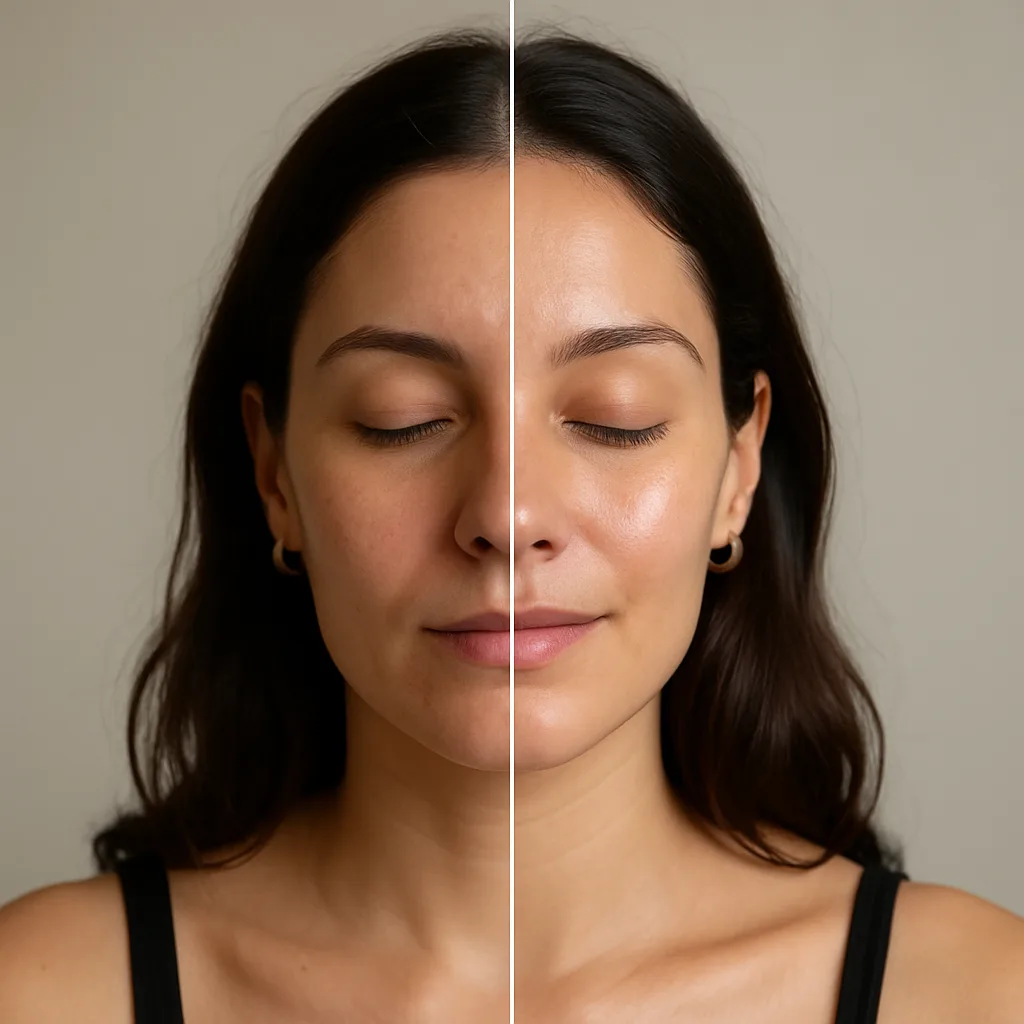
Melanin is not the enemy.
It is a biological shield produced by the skin when it senses danger.
When the skin experiences:
- Excess heat
- Inflammation
- Repeated irritation
- Emotional stress
It increases melanin production to protect deeper layers.
Pigmentation is not damage.
It is defence.
The 4 Hidden Heat Sources That Trigger Pigmentation

1. Sun Is Only One Form of Heat
Yes, UV rays contribute — but they are not acting alone.
Indian skin also reacts strongly to:
- Hot water usage
- Steam and over-exfoliation
- Excessive active ingredients
- Frequent salon treatments
Each of these increases skin temperature, activating melanin.
2. Emotional Stress Directly Darkens Skin
Stress releases cortisol.
Cortisol:
- Increases inflammation
- Weakens barrier repair
- Triggers pigmentation enzymes
This is why pigmentation often worsens during:
- Emotional overload
- Sleepless periods
- Anxiety-driven routines
Skin listens to the nervous system more than mirrors.
3. Over-Cleansing Creates Internal Heat
Aggressive cleansing:
- Strips protective oils
- Leaves skin exposed
- Forces the skin into survival mode
Survival mode equals more pigment.
Many people unknowingly create pigmentation while trying to remove it.
4. “Instant Brightening” Products Backfire
Products that promise instant fairness often:
- Thin the skin
- Increase sensitivity
- Heat up melanin activity over time
Initial brightness fades — pigmentation returns darker and deeper.
This cycle repeats until the skin becomes chronically reactive.
Why Pigmentation Treatments Often Fail
Most treatments focus on:
- Scrubbing
- Peeling
- Suppressing melanin
But pigmentation does not reduce through force.
It reduces when the skin feels:
- Safe
- Cool
- Supported
Suppressing melanin without calming heat is like muting a fire alarm while the fire is still burning.
The Correct Way to Calm Pigmentation
Pigmentation correction begins with cooling, not bleaching.
That means:
- Respecting the skin barrier
- Reducing irritation
- Choosing gentle routines
- Supporting night-time repair
When internal heat reduces, melanin naturally slows down.
This is why some people see pigmentation improve simply by:
- Improving sleep
- Reducing product overload
- Switching to gentler routines
Meaningful Daily Practices That Truly Reduce Pigmentation
These are skin-intelligent corrections — small shifts that calm heat, stress, and melanin signalling at the root level.

1. Switch From “Hot Clean” to “Cool Clean”
- Avoid hot water on the face at all times
- Finish cleansing with slightly cool water
- Never steam pigmented skin regularly
Heat directly activates melanocytes. Cooling sends a safety signal to the skin.
2. Stop Fighting Oil — Use It Intelligently
- Pigmented skin often lacks protective surface oil, not moisture
- Use a light oil massage before cleansing in the evening
- Wipe gently, then cleanse
Oil dissolves oxidised sebum and pollution without raising skin temperature.
3. Reduce Night-Time Skin Load
At night:
- Avoid layering multiple actives
- Do not mix too many treatment products
- Let skin stay calm and undisturbed
Skin repairs pigment only in a low-stress environment.
4. Correct the “Twice-a-Day Face Wash” Habit
- Morning: rinse or use very mild cleansing
- Evening: one proper cleanse is enough
Repeated stripping increases internal heat and rebound pigmentation.
5. Respect Emotional Heat
Pigmentation worsens when:
- Anger is frequent
- Stress is suppressed
- Sleep is irregular
Simple corrections:
- Fixed sleep time
- Slower evenings
- Reduced screen exposure before bed
Cortisol and melanin are directly linked.
6. Stop Weekly Scrubs on Pigmented Skin
- Avoid harsh exfoliation
- Avoid frequent salon detan treatments
- Avoid peel-based glow routines
Scrubbing inflames melanocytes — pigmentation deepens, not fades.
7. Give Skin Silence Time
Once a week:
- Do nothing extra
- Cleanse gently
- Apply minimal support
- Let skin breathe
Skin recalibrates pigment when overstimulation stops.
A Quiet but Powerful Truth
Pigmentation reduces when:
- Heat is reduced
- Stress is softened
- The skin feels protected
Not when it is forced to behave.
Final Realisation
Pigmentation is not your skin failing you.
It is your skin trying to protect you.
When you listen instead of fight, healing begins.