Why Our Grandmothers Digested Better — And Why Our Skin Suffers Today
When bloating, acne, dullness, or eczema appear, most of us instinctively reach for a cream, serum, or supplement. We treat the skin as the problem and digestion as an afterthought.
But what if the imbalance didn’t begin on the skin, or even in the stomach, but in the way food entered our daily lives?
At Araah, we don’t believe healing requires rejecting modern life.
We believe the body remembers rhythm.
And when rhythm is lost, the skin speaks first.
This blog explores how everyday food habits quietly changed digestion over time, and why returning to simplicity can restore balance from within.
The Deeper Truth: Skin Issues Are Often Digestive Signals
In traditional Indian wisdom, digestion, known as Agni, was considered the foundation of health. When digestion was steady, the body stayed calm, resilient, and balanced.
Skin problems were uncommon, not because skincare products were better, but because the internal environment was stable.
Modern research now links many skin concerns to digestive disruption, including:
• Gut overload
• Constant food processing
• Reduced dietary fiber
• Loss of microbial diversity
Instead of beginning with symptoms, healing begins where balance quietly slipped.
Five Food Habit Shifts That Disrupted Digestion and Skin
These are not bad foods.
They are patterns the body was never designed to handle daily.

1. Polished White Rice Replacing Hand-Pounded Grains
Earlier, rice was eaten with its outer layer intact. Hand-pounded rice retained fiber, minerals, and digestive support.
What changed:
• Polishing removed fiber and nutrients
• Digestion became faster but weaker
• Blood sugar spikes increased
• Mineral support reduced
Gentle alternative:
• Hand-pounded rice
• Semi-polished rice
• Millets used in rotation
2. Eating the Same Vegetables All Year
Vegetables once changed with seasons, naturally cooling or warming the body.
What changed:
• Summer vegetables eaten in winter
• Cooling foods consumed during cold seasons
• Digestive confusion and internal heat
Gentle alternative:
• Choose vegetables that grow naturally in your season and region
3. Loss of Fermented Foods
Fermented foods were once regular companions to meals.
What changed:
• Fresh fermentation replaced by refrigeration
• Fewer natural probiotics
• Slower digestion and gut sensitivity
Gentle alternative:
• Fermented rice water
• Buttermilk rice
• Overnight-soaked grains once or twice a week
4. Constant Eating and Excess Variety
Earlier meals were simple and repetitive. The gut knew what to expect.
What changed:
• Multiple cuisines and ingredients in one meal
• Continuous digestive effort
• Incomplete food breakdown
Gentle alternative:
• Simpler meals with fewer ingredients
5. Ultra-Processed and Packaged Foods
Food was once prepared close to consumption.
What changed:
• Chemically preserved foods
• Repeated processing
• Gut inflammation and skin flare-ups
Gentle alternative:
• Fresh, minimally processed foods most days
Seven Gentle Food Practices That Restore Digestive Calm
These are not strict rules.
They are supportive habits that allow the body to breathe again.
1. One Unprocessed Grain at a Time
Why it helps:
• Reduces digestive confusion
• Stabilizes energy
Practice:
• Choose one grain and use it for a few days
• Eat it warm and chew slowly
2. Seasonal Vegetables
Why it helps:
• Balances internal temperature
• Supports digestion cycles
Practice:
• Light steaming with cumin, fennel, or turmeric
3. One Fermented Food Weekly
Why it helps:
• Gently restores beneficial bacteria
Practice:
• Consume small quantities mindfully
4. Warm, Fresh Meals
Why it helps:
• Supports enzyme activity
• Improves gut comfort
Practice:
• Avoid reheating food multiple times
5. Reduced Evening Load
Why it helps:
• Allows digestion to rest and repair overnight
Practice:
• Early, lighter dinners such as soups or simple grain-vegetable meals
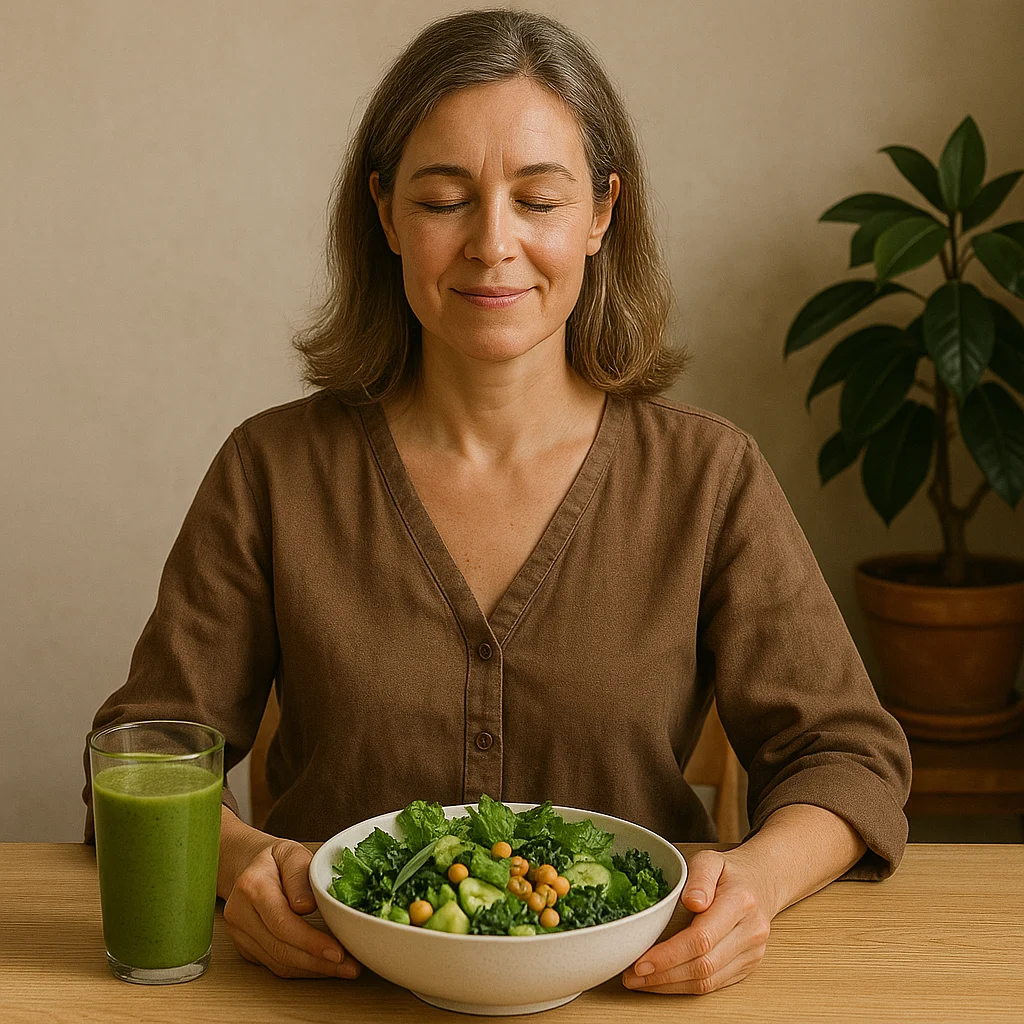
6. Eating Without Distraction
Why it helps:
• Activates the rest-and-digest nervous system
Practice:
• Eat without screens
• Sit quietly for two minutes after meals
7. Repetition Without Fear
Why it helps:
• Reduces inflammation caused by constant novelty
Practice:
• Rotate meals weekly instead of daily experimentation
Healing Affirmation
I do not rush nourishment.
I allow my body to recognize what feeds it.